Configurable templates
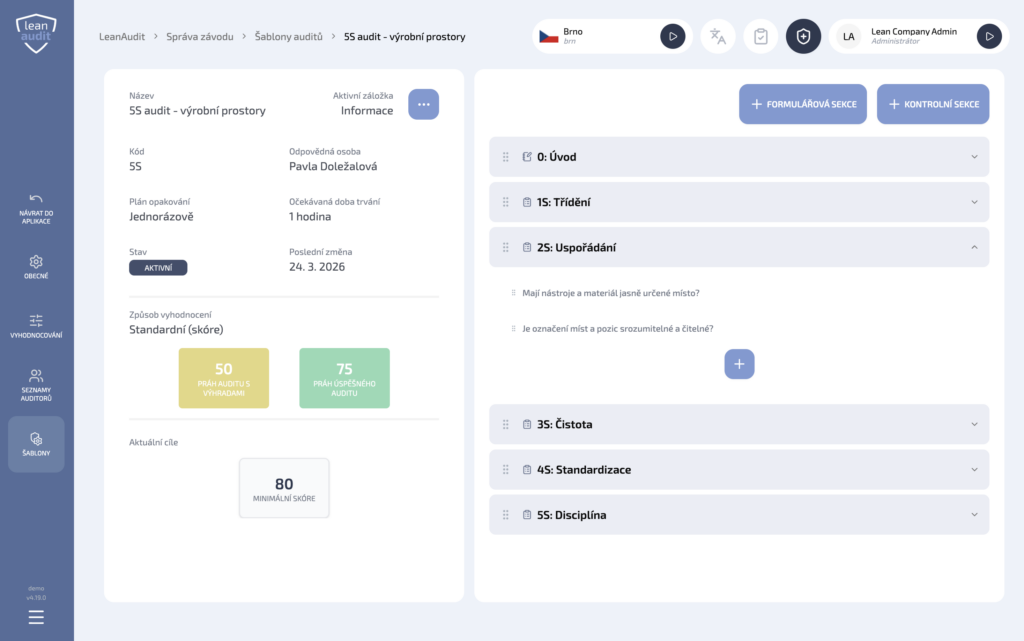
Checklists can be set up exactly according to your controls. Combine evaluation sections with form fields and add visual standards to define the expected state.
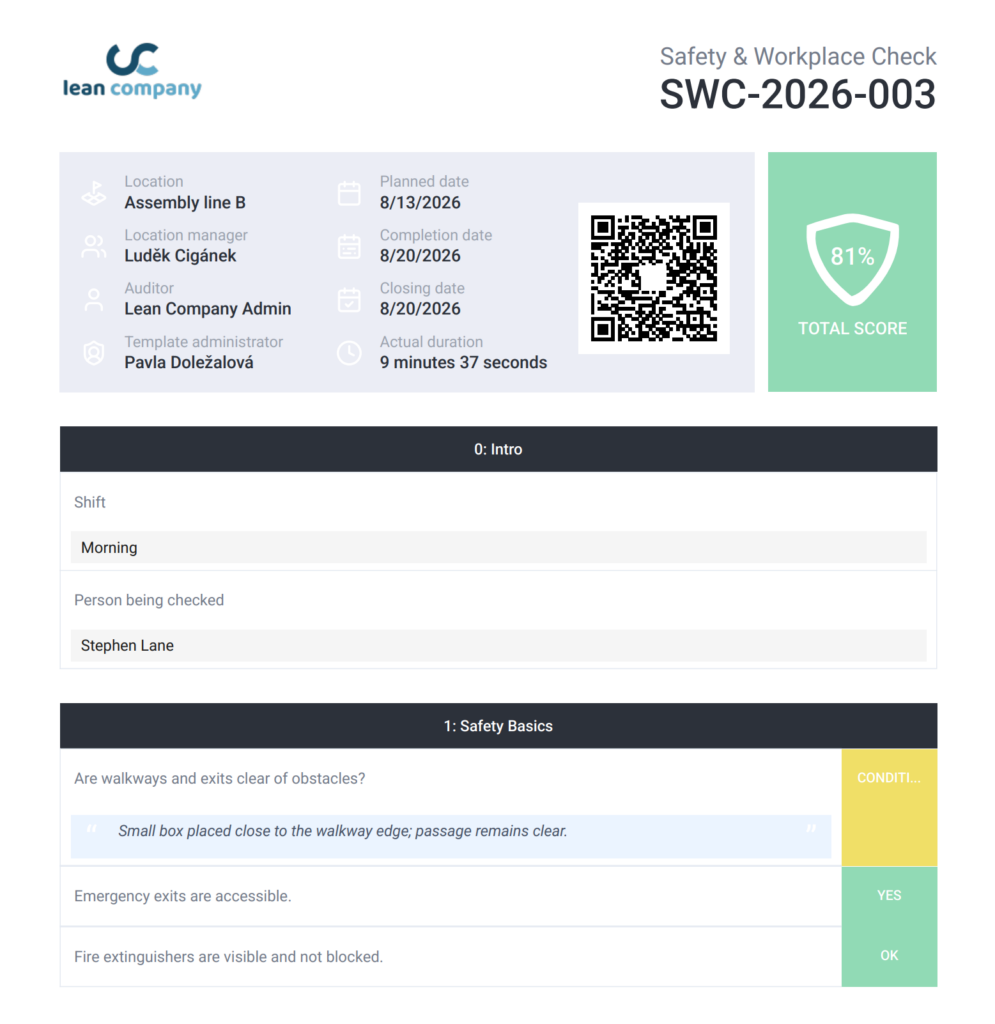
Set different types of scoring – from simple OK/NOK to point-based or custom scales – including thresholds for overall results. You can also require inputs such as photos or comments for findings.
Audit scheduling and recurrence
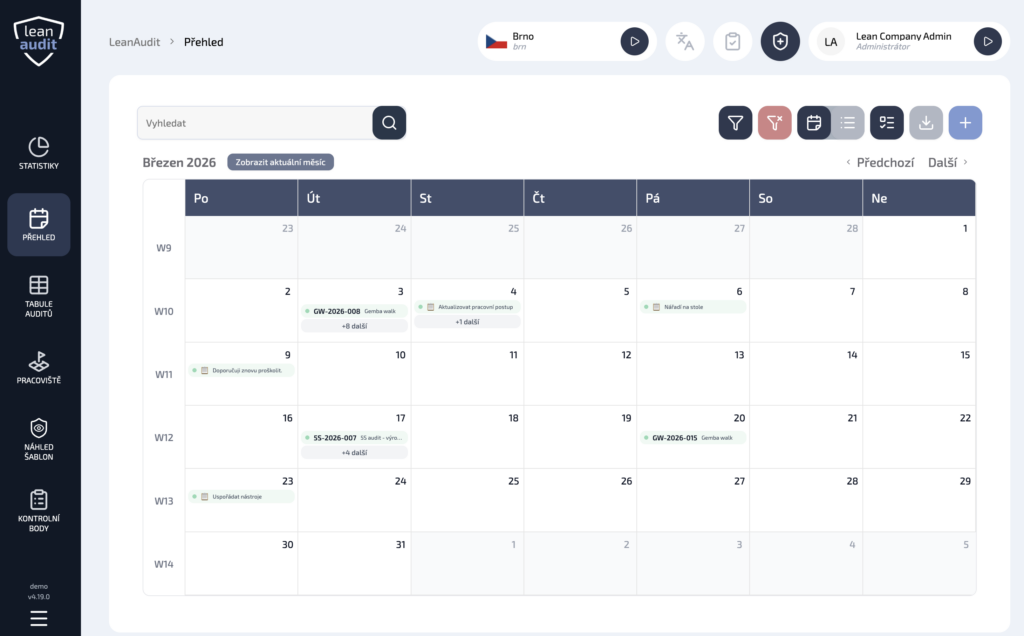
Audits can be planned as one-time or recurring – for a single workplace or across multiple locations. Everything can be set up to match how your operation works.
Audits can be assigned to a specific person, randomly or by rotation from a defined list. This helps ensure they run regularly without gaps.
Mobile audits
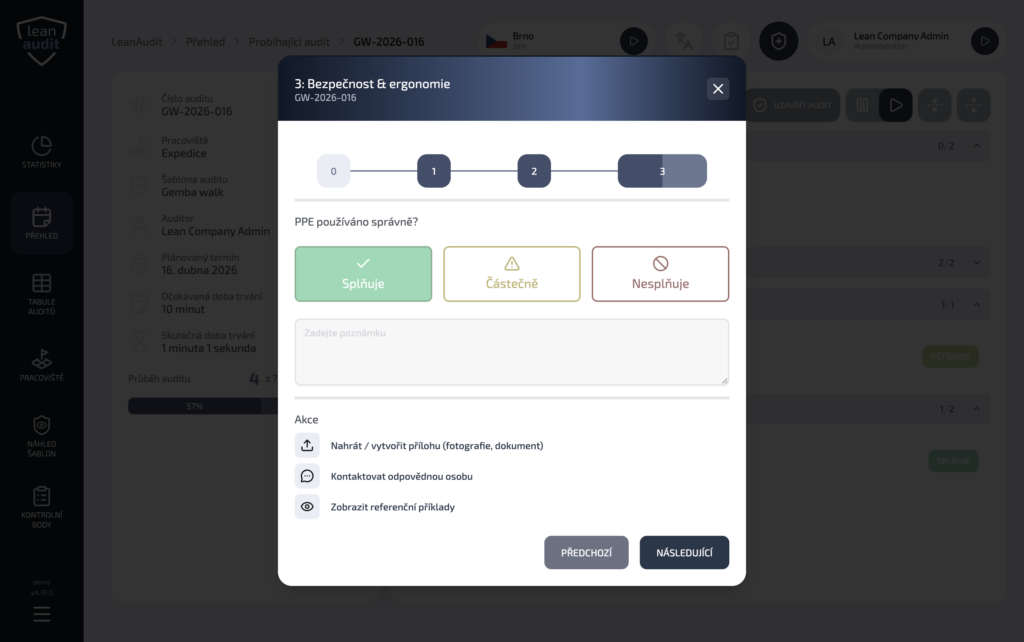
Audits can be carried out directly on a phone or tablet, wherever they take place. Results, photos and comments are recorded on the spot without the need for rewriting.
The template guides the process step by step, keeping results consistent. Outputs are available immediately without additional administration.
Findings and corrective actions
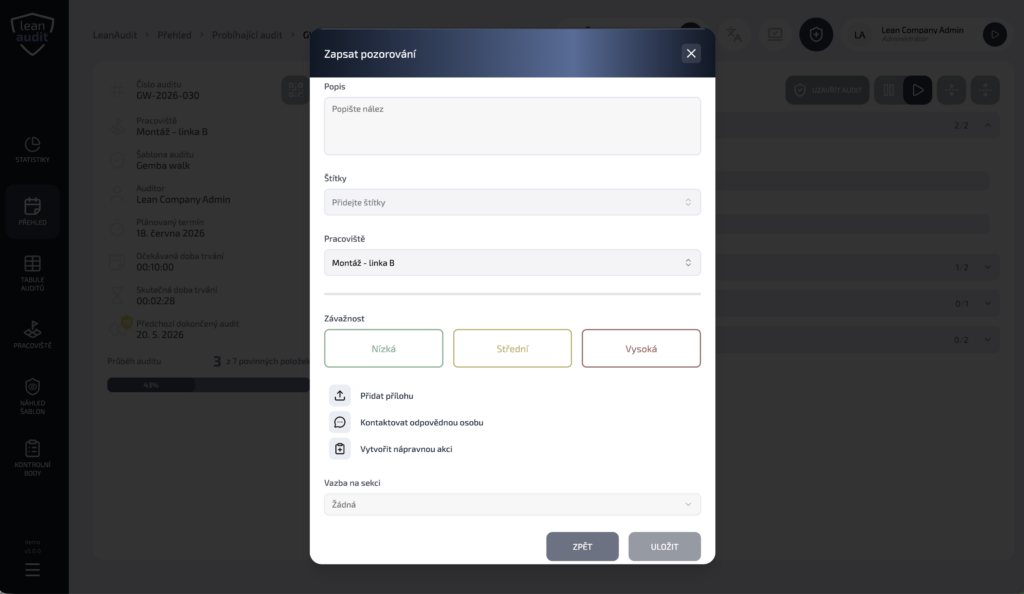
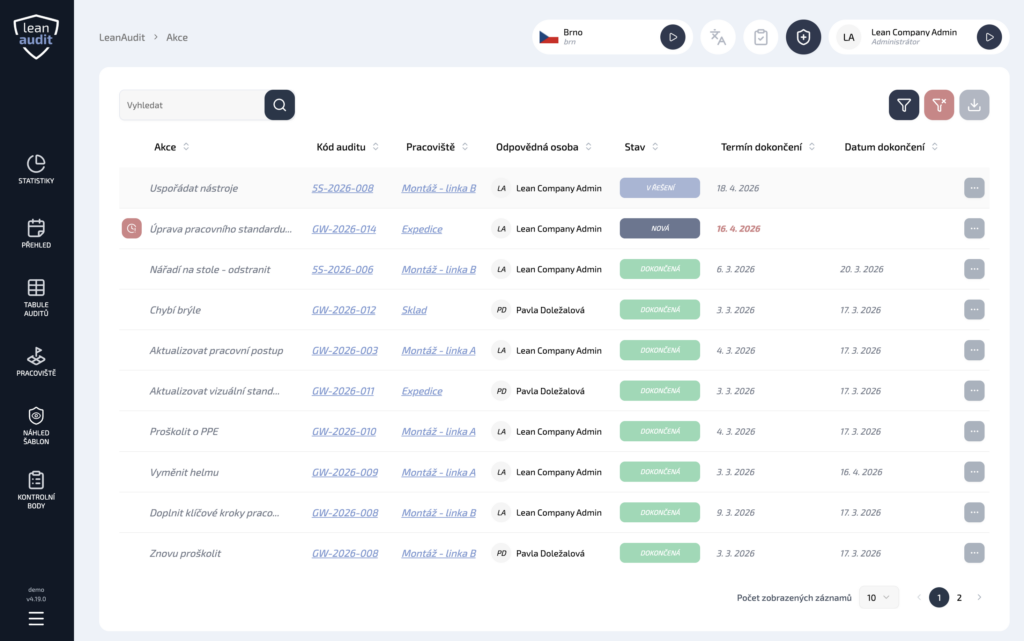
Findings don’t remain just as records. Corrective actions can be created directly from the audit, including assignment of responsibility. Everyone can see what needs to be addressed and who is responsible. The status of actions is clear and continuously updated.
It is then easy to check in a follow-up audit whether all recorded findings have been resolved.
Results over time
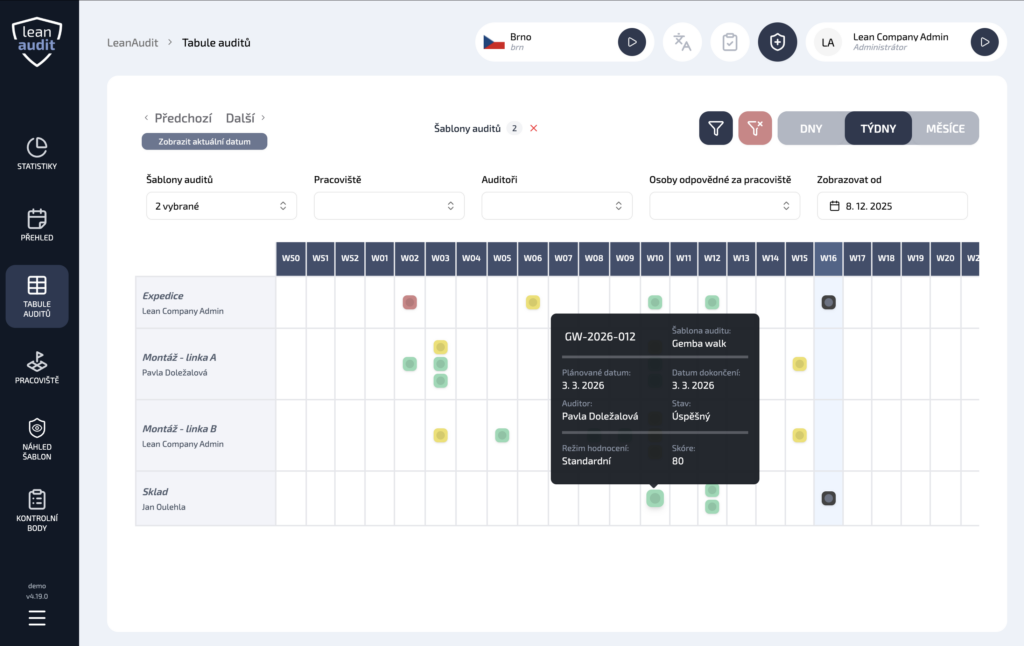
Audit results are clearly visible over time. A colour-coded audit board allows you to quickly compare workplaces, areas or time periods.
At a glance, you can see where issues repeat and where improvement is happening. The overview supports quick orientation as well as further management in daily operations.
Reporting and data analysis
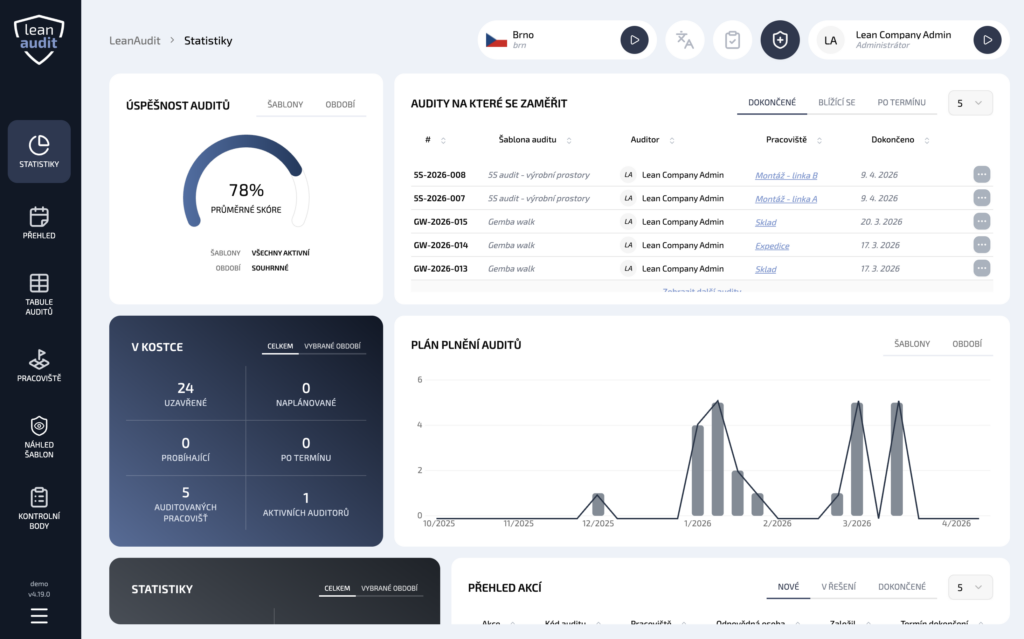
LeanAudit provides an overview of results directly in the application through dashboards. You can see, for example, audit success rates, completion status or trends over time by workplace or type of inspection.
For more advanced work with data, a BI module is available, allowing comparison across sites or more detailed analysis of results. Reporting can be used both for day-to-day management and deeper evaluation.